

Artificial intelligence is no longer a future concept. It is already shaping hiring decisions, restructuring job roles, and creating new career paths across every major industry. In 2026, the question for most professionals is not whether AI is relevant to their career. It is how to build the right AI skills before the market moves further ahead.
This guide covers the best AI courses in 2026 for both beginners and experienced professionals, what each path involves, and how to build a practical AI learning roadmap that leads to real career outcomes.
Why AI Skills Matter More in 2026 than Ever Before
Artificial intelligence is becoming a core business capability rather than a specialized technology. Companies are looking for professionals who can build AI models, analyze large datasets, automate repetitive processes, and develop intelligent applications that improve decision making.
Employers are also seeking people who understand how AI works, even if they are not software developers. Marketing teams use AI for customer insights, finance teams rely on AI for forecasting, and healthcare professionals benefit from AI-assisted diagnostics.
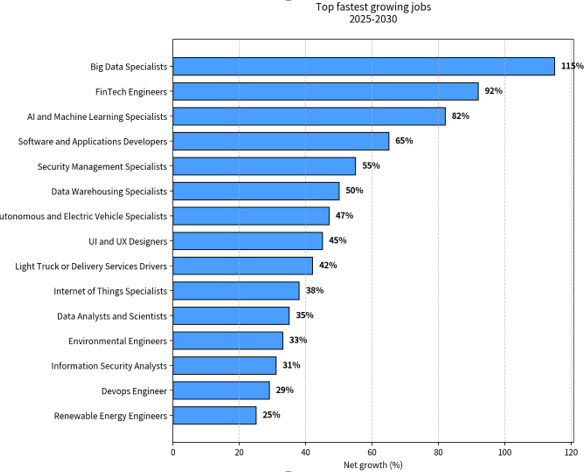
The World Economic Forum’s Future of Jobs Report 2025 identifies AI and machine learning specialists is the third top fastest growing jobs globally, with demand expected to rise by 82% through 2030.
In the UAE, the National AI Strategy 2031 has set a clear goal of positioning the country as a global AI hub, with significant investment flowing into public sector AI adoption, healthcare AI, and smart city infrastructure.
For professionals across Abu Dhabi and Dubai, this creates a real and immediate opportunity. Employers in finance, healthcare, government, logistics, and technology are actively looking for people who understand AI tools and concepts, not just at a theoretical level but in applied, practical terms.
Artificial Intelligence Courses for Beginners: Where to Start
Following an AI learning roadmap in 2026 does not require a mathematics degree or years of programming experience. The field has become significantly more accessible, and the first step is choosing a path that matches the current level of technical background.
AI Fundamentals and Concepts
This is the right entry point for anyone with no prior technical background. Foundational AI courses cover what artificial intelligence is, how machine learning models work at a conceptual level, and where AI is applied across industries. The focus is on building understanding rather than writing code.
Explore the AI Course for Non-Developers in Abu Dhabi at Al Manal Training Center, specifically designed for professionals in business, administration, and healthcare who want to work effectively in AI-influenced environments without a programming background.
Python for AI and Data Science
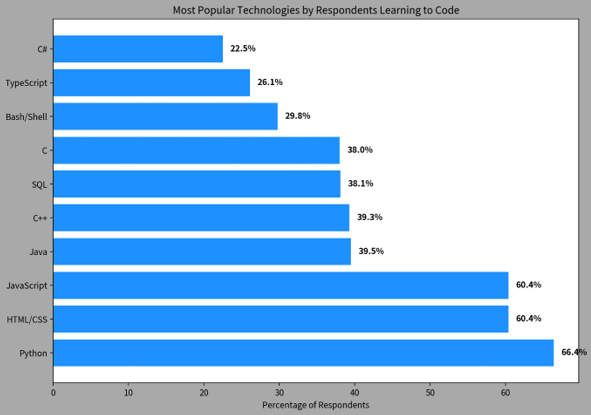
Python is the foundation of most AI and machine learning work. According to the Stack Overflow Developer Survey 2024, Python stands out as the most popular technology among respondents learning to code, with 66.4% adoption. It comfortably leads ahead of web technologies like HTML/CSS and JavaScript, highlighting its strong appeal for newcomers entering the field.
In 2026, mastering Python is no longer optional for anyone serious about AI; it’s the essential gateway that lets you quickly experiment, build prototypes, and scale solutions. Whether you’re a complete beginner aiming to break into tech or a professional looking to future-proof your career, investing in Python will give you the strongest return as demand for AI talent continues to surge.
Data Science and Machine Learning
Data science is where most courses naturally lead after foundational training. It combines statistics, programming, and domain knowledge to build models that extract insights and make predictions from large datasets.
According to PayScale UAE, data scientists in the UAE earn an average of AED 115,827 annually in 2026, with senior professionals earning significantly above that range.
The Data Scientist Course in Abu Dhabi at Al Manal Training Center covers Python, statistical modeling, and data analysis with real-world project work built into every stage of the program.
Advanced AI Courses for Professionals in the UAE
For professionals who already have a foundation in Python or data science, advanced AI courses cover the specialized techniques that are driving the most significant changes in industry right now.
Deep Learning
Deep learning is a subset of machine learning that uses neural networks with multiple layers to process complex data such as images, audio, and text. It powers facial recognition systems, medical imaging tools, autonomous vehicles, and large language models.
Al Manal Training Center offers a Deep Learning Course in Abu Dhabi covering neural network architecture, convolutional neural networks, and practical model training using TensorFlow and Keras.
Natural Language Processing
Natural language processing, or NLP, is the branch of AI that enables machines to understand, interpret, and generate human language. It is the technology behind chatbots, translation tools, sentiment analysis systems, and AI writing assistants. NLP professionals are in demand across banking, healthcare, government, and customer service technology.
Enroll in the NLP Course in Abu Dhabi at Al Manal Training Center to learn text preprocessing, sentiment analysis, named entity recognition, and transformer models including BERT and GPT-based architectures.
MLOps
Building an AI model is one thing. Deploying it reliably into a production environment, monitoring its performance, and managing it over time is another discipline entirely. MLOps, or Machine Learning Operations, bridges the gap between data science and software engineering.
The MLOps Certification in Abu Dhabi at Al Manal Training Center covers CI/CD pipelines for ML, model monitoring, containerization with Docker and Kubernetes, and cloud deployment workflows.
Building a Practical AI Learning Roadmap in 2026
A structured roadmap looks different depending on the starting point. Here is a practical progression that applies to most learners:
- Stage 1: Foundations: Python programming, basic statistics, and an understanding of what machine learning is and how it works. Duration: 4 to 8 weeks.
- Stage 2: Core Machine Learning: Supervised and unsupervised learning, model evaluation, and feature engineering using Scikit-learn. Duration: 6 to 10 weeks.
- Stage 3: Specialization: Choose a direction. Deep learning for image and language tasks. NLP for text-heavy applications. MLOps for deployment and production workflows. Duration: 8 to 12 weeks per specialization.
- Stage 4: Applied Projects: Build a portfolio of completed projects using real datasets. This is what UAE employers test for in interviews.
- Stage 5: Certification: Pursue recognized credentials such as the AWS Certified Machine Learning Specialty, Google Professional Machine Learning Engineer, or AAPC-equivalent certifications in applied AI.
Self-study works for some learners, but structured training often speeds up the learning process. Instructor guidance, practical labs, and project-based learning help students develop confidence while working with real AI tools.
The total journey from beginner to job-ready depends on the hours invested per week and the quality of instruction. With structured, instructor-led training, most professionals reach an employable skill level within six to twelve months.
If you want personalized instruction, practical assignments, and industry-focused learning, Al Manal Training Center offers programs designed for learners at different experience levels.
Frequently Asked Questions
1. What are the best AI courses for beginners in 2026?
For beginners, the best starting points are AI fundamentals courses that require no coding background, followed by Python programming and introductory machine learning. Al Manal Training Center offers beginner-friendly programs in Abu Dhabi covering all of these in a structured sequence.
2. Which AI certifications are most valuable for professionals?
The most recognized AI certifications in the UAE include the AWS Certified Machine Learning Specialty, Google Professional Machine Learning Engineer, and Microsoft Azure AI Engineer Associate. For deep learning and NLP specialists, completing structured training programs backed by a recognized institute adds significant weight to a professional profile.
3. How long does it take to learn artificial intelligence?
A beginner with no technical background typically needs six to twelve months of structured training to reach an entry-level AI role. Professionals with existing Python or data science skills can specialize in deep learning, NLP, or MLOps in eight to sixteen weeks of focused training.
4. Are online AI courses worth it in 2026?
Online courses are useful for theoretical understanding but have a high dropout rate and limited feedback on practical work. For technical subjects like machine learning and deep learning, instructor-led training with real projects and individual feedback consistently produces better outcomes and more employment-ready graduates.
5. What skills are required to start learning AI?
No prior technical skills are required for beginner AI courses. For intermediate and advanced programs, basic Python programming and a working understanding of statistics are helpful. Structured training programs at Al Manal are designed to build these foundations before progressing to applied AI techniques.
Final Thoughts
Artificial intelligence continues creating exciting career opportunities across nearly every industry. Choosing the best AI courses in 2026 depends on your current experience, career goals, and preferred area of specialization.
Beginners should focus on the courses that build strong foundations in Python, mathematics, and machine learning. On the other hand, experienced learners can benefit from advanced AI courses that cover deep learning, MLOps, large language models, and enterprise AI systems. Following a structured roadmap helps you develop skills in a logical sequence while building practical experience through projects.
With consistent practice, hands-on learning, and guidance from experienced instructors, you can build the knowledge needed to succeed in one of the fastest-growing fields in today’s technology landscape.